Quartzite vs Quartz Appearance: Visual Differences, Colours, and Veining Patterns
Choosing a countertop is as much an aesthetic decision as a practical one. This page covers how quartzite and quartz differ visually -- the nature of their veining, colour range, finish options, and how each material looks in different lighting and cabinet contexts.
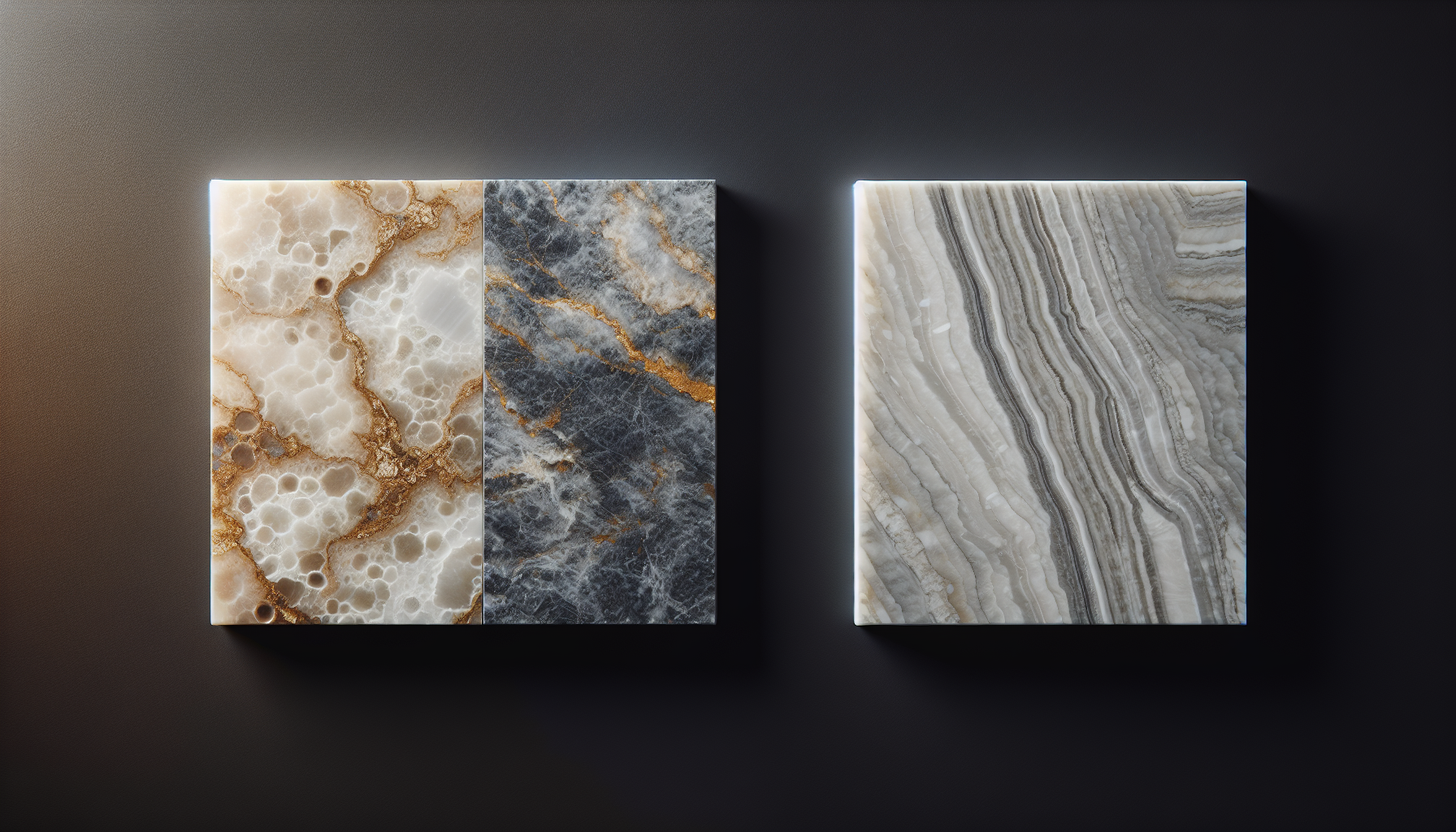
The visual difference is immediate: quartzite's organic movement (left) vs quartz's manufactured uniformity (right).
Visual Characteristics Compared
| Property | Quartzite | Quartz |
|---|---|---|
| Veining source | Natural geological formation | Manufactured with pigments/dyes |
| Veining consistency | Unique per slab | Consistent batch-to-batch |
| Colour range | Whites, greys, golds, tans, some greens/pinks | Virtually unlimited, including bold colours |
| Pure white options | Super White, White Macaubas | Many (Silestone White/Grey, Caesarstone Snow) |
| Dramatic options | Fantasy Brown, Sea Pearl | Bold blacks, deep blues, concrete greys |
| Depth effect | Crystalline 3D depth | Flat 2D pattern (improving in newer lines) |
| Polished finish | Yes | Yes |
| Honed finish | Yes | Yes |
| Leathered finish | Yes | Limited (some brands) |
| Brushed finish | Rarely | Some brands offer |
| Slab-to-slab match | No -- each slab unique | Yes -- consistent by design |
| Required viewing | Must see actual slab | Samples are representative |
The Look of Natural Quartzite
Quartzite's visual character comes from its geological formation. As sandstone recrystallises under heat and pressure, mineral impurities create flowing veins, colour gradients, and crystalline sparkle that manufactured materials cannot replicate.
See Quartzite Types guide for full profiles, pricing, and selection advice.
The Look of Engineered Quartz
Quartz's manufactured nature gives it design freedom that nature cannot: any colour, any pattern density, any level of veining drama. The trade-off is that the "movement" looks manufactured to a trained eye.
Pure whites, blacks, greys, and even blues or greens are possible. No natural stone equivalent for the bolder options.
Modern quartz technology replicates marble, granite, and quartzite with increasing realism. Cambria Brittanicca and Caesarstone Empira White are convincing marble alternatives.
Uniform grey tones with subtle texture. Popular in industrial and contemporary kitchens. No natural stone equivalent.
Deep navy, forest green, jet black with white veining. These statement colours are only possible with engineered quartz.
Finish Options: Polished, Honed, Leathered
High-gloss reflective surface. Maximises colour depth and visual drama. Shows fingerprints and water spots more readily. Easiest to clean. Most popular choice.
Matte finish with no reflectivity. Hides fingerprints and small scratches well. Feels more casual and contemporary. Requires slightly more sealing on quartzite (more porous surface).
Textured surface created by brushing the stone. Tactile, artisanal feel. Excellent at hiding fingerprints and daily marks. Adds visual interest without high gloss. Very popular for kitchen islands.
Lightly textured matte surface similar to honed but with more tooth. Available from select quartz manufacturers. Less common than polished or honed.
Pairing with Cabinet Colours
Light quartzite (Taj Mahal, White Macaubas) creates warm luxury. Dark quartzite (Fantasy Brown) creates dramatic contrast.
Neutral quartz (light grey, white with subtle veining) for seamless modern look. Bold quartz for statement contrast.
Light quartzite creates beautiful contrast -- white stone against dark cabinetry is a classic luxury combination.
Light grey or white quartz works well. Avoid very dark quartz against dark cabinets -- too little contrast.
Taj Mahal's warm cream and gold tones harmonise naturally with warm wood. Excellent pairing.
Concrete grey quartz or Calacatta-style quartz works well with medium woods. Avoid very cool tones.
White quartzite with grey veining creates elegant contrast. Sea Pearl's grey-green can harmonise or clash depending on tones.
White or light quartz with clean veining. Allows the cabinet colour to be the statement.